Thursday, June 29, 2017

Trivia

Kingsnakes Derive Their Name From Their?
Royal Coloration
Use In Luxury Garments
Diet
Venom Type


Answer: Diet
Kingsnakes (members of the genus Lampropeltis) are a diverse group comprised of five primary species and forty-five subspecies that have a wide range of sizes, colors, and habitats. What links this diverse stable of snakes together, however, isn’t any of those wide variables like size or color, but diet.
Kingsnakes are called such because they prey not only on a wide variety of creatures like birds, rodents, lizards, eggs, and whatever else they can opportunistically snatch up, but they will also prey on other snakes, including venomous snakes—in fact, many kingsnake species are immune to the venom of the venomous snakes they prey on.
In addition to venom immunity, many kingsnakes are able to exert unusually high levels of constrictive force, an adaptation researchers believe helps them to kill other snakes and reptile prey (which can sustain lower blood-oxygen levels before asphyxiating).
The “king” reference used to refer to snakes that prey on other snakes extends outside of the kingsnake “family” too; the king cobra is called such because it eats other snakes and even true cobras (of the genus Naja).

Did You Know

Did You Know?

Norway has won more gold medals at the Winter Olympic Games than any other country.

Today's Tech Term 

Y-Cable

A Y-Cable (a.k.a. Power Y-Cable) is a “Y” shaped power cable with three ends, one of which is a single common end that splits into half, forming a dual end.

Y-Cables are used to power internal hardware such as hard drives, CD-ROMs, DVD-ROMs, etc. and may also be used as an extension for other power cables.

Electric Skateboard

The Boosted Electric Skateboard Is Better Than Just Fun—It's Useful

And every ride puts a smile on your face.

boosted board
By Timothy Dahl

Riding an electric powered skateboard has been a dream of mine since 7th grade. So when I saw Casey Neistat cruising through New York so effortlessly on his Boosted Board, I knew I had to try it.

I have little interest in riding a hoverboard unless it's like Marty McFly's, but skating on a board without pushing always seemed like the ultimate thrill. I'm past learning kickflips, and prefer to keep all four of my wheels connected to the ground when I go out on my Arbor longboard. But my skating range is limited, and when I know I'd like to cover more ground I always opt for my bike. The Boosted electric skateboard changes all of this, and not only provides a thrilling afternoon adventure, but can also be a legitimate mode of transportation for commuting or simply getting around town.

THE SPECS

The Boosted Board is no toy. The 2nd generation Boosted Board is available in two models. The Dual+ ($1,499) is rated at a top speed of 22 mph, can climb hills with 25 percent grade, and has a standard range of 7 miles. A step below is the Dual ($1,299) which tops out at 20 mph, can climb a 20 percent grade, and also has a seven mile range. Later this year an extended range battery will be available for $199, that ups the range to considerable 12 miles.


I had the pleasure of riding a the Dual+ for a couple weeks. Its motor produces 2000 watts of power, which is transferred to each rear wheel by a belt drive system. It's all encased in a slim weatherproof enclosure that fits flush against the bottom of the board. It weighs in at 14.7 pounds which is manageable to tote around, but not ideal to carry long distances.

THE RIDE

I skated everyday in middle school and now only occasionally, but I still enjoy snowboarding and surfing. Having previous board riding experience definitely helped me get the feel of the Boosted Board faster. The starting sensation takes a bit of getting used to, but once you are up and riding the Boosted Board handles like any longboard skateboard.

The deck is made from solid bamboo and shaped to provide a natural suspension, which snaps you through turns and smooths out the bumps. The large diameter wheels also improve the ride and have a nice grip.

The Boosted Board is controlled by a handheld bluetooth device, that uses a thumb rolling mechanism to adjust your speed and braking. It's fairly intuitive, but the thumb trigger is sensitive to the slightest touch. It doesn't take much for the board to jolt into action.


There are four speed modes, that are designed for your level of riding. The first mode is purely beginner, and I found myself in that mode for most of the first few days of riding. The next mode up is an eco-mode that suited my needs just fine, but when I wanted a real thrill I bumped it to the third mode which is sport. Of course I had to try out the board in the fourth pro mode, but after scaring myself a bit at top speed, I realized I needed more than two weeks to work up to that. The higher modes are not only faster, but they accelerate quicker, and can climb steeper hills.

WHO'S IT FOR

The Boosted Board is ideal for anyone seeking a fun-first mode of transportation. A bike or car may get you somewhere faster, but the Boosted Board is all about the journey. You may think it's a bit pricey, but it's comparable to low-end electric bikes. Unlike a bicycle, it can be stored under your desk at work or in your closet.


Remember, always wear a helmet. The Boosted Board is deceptively fast, and pedestrians, bicycles, and cars, will often not know how to react to seeing you whizzing by.

Movie Preview - Despicable Me 3

Entertainment News

Marvel Studios Boss Kevin Feige Says Modern Superhero Films Owe It All To Blade, Who's Coming To The MCU 'Someday'

'Blade' [Credit: New Line Cinema]] 'Blade' [Credit: New Line Cinema]

By Tom Bacon, writer at CREATORS.CO

Twenty years ago, Batman and Robin seemed like the death knell for comic book movies. Hollywood concluded that audiences were tired of superheroes, and began to move on. For #Marvel, which for years had tried to generate interest in its characters, the future looked bleak. And then came Blade.

Even though Blade wasn't as famous as Spider-Man or the Fantastic Four, the success of Wesley Snipes's trilogy proved that superhero movies had a future. Now, Marvel visionary #KevinFeige has chimed in on the character's past and future.

Kevin Feige Fondly Remembers The Blade Franchise

Speaking to JoBlo, Feige observed:

"My tenure at Marvel started 17 years ago, and there were two things that sort of launched the modern era. One was X-Men, which was the first thing that people said, 'Oh, there's life here.' But a few years before that, there was Blade."

As strange as it may seem to modern Marvel fans, back in the 1990s, Hollywood viewed Marvel with disdain. A kid who gets bitten by a radioactive spider? A super soldier from World War II who throws his shield like a Frisbee? Really?

Blade changed that. It was an R-rated vampire film that rejoiced in its blood and gore. And it earned $131 million against a budget of just $45 million. The film became a cult classic, and #WesleySnipes is still remembered for the role today.

 As Feige noted:

"A character nobody had heard of at all, had only appeared in a few issues of Tomb of Dracula or something, turned into a big franchise. That was always a great lesson for me, where you go, 'It doesn't matter how well known the character is, it matters how cool the movie is.' Which, many years later, would be the reason we do Guardians of the Galaxy, Doctor Strange."

The entire #MCU is built on the lesson that Feige learned from Blade. In financial difficulty back in the late '90s, Marvel had sold the film rights to its greatest characters to other studios. When Marvel's executives decided to start making films themselves, they were essentially stuck with the leftovers; the characters nobody had been interested in buying the rights to, and the characters whose rights had reverted because studios decided they weren't interested in them.

As hard as it is to imagine, Iron Man was hardly an A-list superhero before Robert Downey Jr.'s massive comeback role in 2008. When Marvel announced Guardians of the Galaxy, everyone thought that the studio had finally jumped the shark — the movie starred a talking raccoon and a walking tree, after all! Instead of crashing, though, the film grossed a whopping $773 million in the global box office. This year's sequel grossed over $850 million, making Vol. 2 the most successful Marvel movie not to feature Robert Downey Jr.

According to Kevin Feige, the film that taught him to take risks with these properties? Blade.

Don't Expect To See Him Return Soon, Even Though It'll Happen Eventually

'Blade' [Credit: New Line Cinema]

Fans are eager for the Daywalker to return, but sadly it seems that Feige has no immediate plans. As he explained:

"We think it would be cool. Someday... I think Blade is a legacy character now, and I think it would be fun to do something with him one day."

It's an answer that's sure to leave fans frustrated. Many have suggested that the character would be ideally suited to the tone and style you see in Marvel Television's Netflix shows, but this suggests Feige is in no hurry. Last year, we learned that Marvel turned down a pitch for an Underworld/Blade crossover, leading Kate Beckinsale to suggest that the House of Ideas was "doing something with Blade." Naturally, Feige was asked, and responded:

"They did ask a long time ago and I think our answer was, ‘No, we’ll do something with ‘Blade’ at some point.’"

It seems that answer hasn't really changed. Feige fully intends to "do something" with the franchise, but he has no solid plans. All he has is the vague sense that this is a property he wants to keep his hands on, because he thinks that one day it could be great again.

Your Integrity

Your Integrity Shows Your 

Faithfulness

By Rick Warren
“Whoever is faithful in small matters will be faithful in large ones; whoever is dishonest in small matters will be dishonest in large ones”   (Luke 16:10 TEV).
A common saying today is that “what you do in your private life is nobody’s business.” Well, it actually is. What you do in your private life —behind closed doors or out of view of other people —builds and reveals your true character. And God sees it just as clearly as the things you do in public.
In fact, the small things you do that are unseen are the seeds to God’s public blessing on your life. You cannot compartmentalize your life and say, “I have integrity in my public life, just not in my private life.” I bet you could make a list right now of public figures who have tried to live their lives this way only to have their private indiscretions become this week’s public scandal and their personal downfall. No matter what they say, any leader who is not faithful in small matters will not be faithful in large matters.
Jesus says, “If you have not been faithful with that which belongs to someone else, who will give you what belongs to you?” (Luke 16:12 TEV)
For centuries, everybody who learned a skill, trade, or vocation learned it through an apprenticeship. If you were going to be a mechanic, you apprenticed to another mechanic and served in his or her business before you started your own.
This principle of apprenticeship applies to every area of your life. It applies to how you handle other people’s money, how you handle other people’s possessions, and even how you handle other people’s ministry before God gives you your own.
Before God gave me my own ministry, I served as a youth pastor under another man’s ministry. God was watching how I handled it; he was testing my integrity. I needed to prove my faithfulness in that ministry before God would allow me to lead the ministry of Saddleback Church.
If someone loans you his car, how well do you take care of it? If a family lets you stay in their house for vacation, do you treat it as well as you treat your own home? God is watching and testing your integrity. And he will reward you accordingly.

Which Came First?

Which Came First?

By Touching Lives 
“For if, while we were God’s enemies, we were reconciled to Him through the death of His Son, how much more, having been reconciled, shall we be saved through His life!” Romans 5:10
Which came first, the chicken or the egg? It is an age-old question. Strong arguments can be made on both sides. Life is filled with these types of questions. Scientists study, examine and argue over the origin, make-up, and effects of different forms of life and matter all of the time. Sometimes they find definitive answers, and sometimes they are left with more questions.
Likewise, there are many deep, theological questions that are continuously examined and debated in the Christian community. Some of these are important, while others only serve to divide, confuse, and preoccupy. Oswald Chambers wrote, “I am not saved by believing; I realize I am saved by believing.” In other words, “Which came first, my faith or my salvation?” While some might be frustrated by such a question, I believe it is a necessary one.
There is a danger for Christians to emphasize what we have done over what God has done in Christ when it comes to our salvation. We don’t mean to…but it happens. We look to our repentance, our prayer of salvation, and other outward signs to give us confidence that we are saved. We look to the point of our realization of what Christ had done; instead of to that cross thousands of years ago, as evidence that we are His.
The truth is, however, that if any of us are right with God, it is because of what Jesus did – prior to anything we have done. We are saved totally because of His finished work on the cross and His resurrection from the grave. When God reveals the truth of the Gospel to us, inviting us to believe, and we accept His invitation, we experience the supernatural grace of God. All at once, we stand right with God. Not because we repented and believed, but solely because of what Jesus has done.
Romans 5:10 tells us that we were reconciled with God – not when we believed – but while we were His enemies. Understanding this truth is paramount to living the life that Christ desires. There is nothing we did to earn salvation…and there is nothing we can do to earn God’s favor now. In Christ, we are truly free.

Why We Need Jesus Every Day

Why We Need Jesus Every Day


By Debbie McDaniel, Crosswalk.com Contributor

"Then Jesus declared, 'I am the bread of life. He who comes to me will never go hungry, and he who believes in me will never be thirsty.'"  John 6:35

Not a day goes by that we're not in need of God's grace and peace. Every morning we need His Spirit to fill us again, to strengthen us for what's ahead. Every day we need a fresh word that He speaks to our hearts, that keeps our focus on what's most important. Trying to run this race of life without Him, will do nothing but drain us dry.

The people of Israel spent 40 years in the desert. Wandering in circles. Times were intense, hot, dry. I'm sure they got weary. But God met them where they were. He made sure they had what they needed. They learned through every hard and grueling step, how much they had to rely on Him.

They were hungry. And God sent manna. Every day a miracle was there, right before their eyes. They just had to pick it up.

“When the dew was gone, thin flakes like frost on the ground appeared on the desert floor. When the Israelites saw it, they said to each other, “What is it?” For they did not know what it was.

Moses said to them, “It is the bread the Lord has given you to eat. This is what the Lord has commanded: ‘Everyone is to gather as much as they need. Take an omer for each person you have in your tent.’”

The Israelites did as they were told; some gathered much, some little. And when they measured it by the omer, the one who gathered much did not have too much, and the one who gathered little did not have too little. Everyone had gathered just as much as they needed.Then Moses said to them, “No one is to keep any of it until morning.”  Exodus 16:14-19

And just like the people of Israel had to gather it fresh every morning in the wilderness, so it is with us. They couldn't store it up; they had to look for it daily. And God always provided. Each morning it was there, waiting for them. Every day He made sure it met their needs, they were satisfied, they were nourished, they were cared for. And they never lacked, for God's resources never run dry.

Thur Inspiration

Morning Inspiration with Pastor Merritt

Speaking of worry, Jesus takes has us do some thinking.

And which of you by being anxious can add a single hour to his span of life?” (Matthew 6:27)

You don’t add one thing to your life when you worry. You wish you weren’t so short? Worrying won’t make you taller. You wish you weren’t overweight? Worrying won’t lose a pound. You wish you had more time? Worrying won’t give you another minute. Worrying never solved a problem, never dried a tear, never lifted a burden and never removed an obstacle. Worry has never made a bad thing good or a good thing better. Someone said that “Worrying is like shoveling smoke. You’re not any better off when you are done than you were when you started.”

If you don’t do anything else, I want you to write down two statements. There are two things you should never, ever worry about.

1. Never worry about things you can change). Now that makes sense. If you are worried about something you can change, instead of worrying about it, change it.

2. Never worry about things you can’t change. That makes sense. Worrying is not going to
change anything you can’t change and if you can’t change it why worry about it? Except for the things you can change and the things you can’t change, I invite you to worry about anything else.

Wednesday, June 28, 2017

Hunting for Planet 9 and 10

Astronomers Are Now Hunting for Planet 9 and Planet 10

New research indicates there may be an undiscovered planet lurking in our solar system, in addition to the one we're already searching for.


Heather Roper/LPL
 
By Avery Thompson

Astronomers are still hunting for evidence of a proposed ninth planet lurking somewhere in the outer reaches of our solar system. But now they have something else to search for. New research from the University of Arizona hints that there may be another planet out there, waiting for us to find it.

Researchers Kat Volk and Renu Malhotra studied the orbits of objects in the Kuiper Belt, the asteroid field where Pluto is located. Objects in the Kuiper Belt orbit at an incline relative to the rest of the solar system. Typically, unusual orbits like these can be explained by the gravitational influence of nearby planets, but there are no existing planets that could have caused this kind of tilt.


Heather Roper/LPL

One explanation, proposed by the researchers, is that there is another planet out there messing with those Kuiper Belt objects. According to the pair's calculations, the undiscovered planet would have to be about the same size as Mars. The researchers predict that the mystery planet is around twice as far away from us as Pluto, at 50 to 55 AU.

But there's good reason to be skeptical that this planet exists at all. A planet as large and close as the researchers claim shouldn't be too difficult to spot, so if it does exist it would be surprising that it was not noticed before now. There are several sky surveys like Pan-STARRS and NEOWISE that should have picked it up.

But just because they haven't seen anything yet doesn't mean that Planet 10 isn't out there. It could be particularly hard to spot, dark and non-reflective, or hiding in a region of the sky where we haven't looked at in detail. If Planet 10 isn't out there, that means something else is causing the strange orbits of all the objects in the Kuiper Belt, which might be an even bigger mystery.

It will probably take a very long time to find out for sure if Planet 10 is really out there, but expect a lot of astronomers and planetary experts to weigh in over the coming weeks and months. If Planet 10 does exist it'll only be a matter of time until we find it.

Source: University of Arizona via New Scientist

New Words Added to Oxford Dictionary

Oxford Dictionary Boasts a New Final Word

'Zyzzyva' has been added, as have 'post-truth,' 'unclick,' and a word describing sperm


By Arden Dier,  Newser Staff


The Oxford English Dictionary is seen in New York.  
 (AP Photo/Caleb Jones, File)

(NEWSER) – And you thought "covfefe" was hard to pronounce. The Oxford English Dictionary has added more than 1,200 new "words, phrases, and senses" to its tome, per a blog post, and among them is an entry that nabs the spot as the last word in the book. "Zyzzyva" (zih-zih-vah), the name given to a particular type of weevil beetle hailing from South America, has bumped "zythum," which refers to an ancient Egyptian malt beer. Coined by entomologist Thomas Lincoln Casey in 1922, "zyzzyva" already appears as the last word in several other dictionaries, but it's getting plenty of attention now since the OED is "the standard-bearer of dictionaries," per the Washington Post.

According to the OED blog, "zyzzyva" might have been meant as "an onomatopoeic reference to the noise made by the weevil," and it might have been "chosen deliberately as an alphabetical curiosity." Other changes to the dictionary: Oxford's 2016 word of the year, "post-truth," has been added, along with "unclick"; "swimmer" (as it refers to sperm); the insulting phrase "son of a bachelor" which dates to 1657; and various terms for subatomic particles, per Time. The definition for "thing" has also been updated to refer to its use "in questions conveying surprise or incredulity, such as 'is that even a thing?,'" while the adjective "woke" now reflects its meaning as "alert to racial or social discrimination and injustice."

Prioritize Preferred Wi-Fi Networks

How to Prioritize Your Preferred Wi-Fi Networks on a Chromebook

By Chris Hoffman


Your Chromebook automatically connects to Wi-Fi networks you’ve previously connected to. But, if multiple known Wi-Fi networks are in range, you might want to configure which one gets priority. For example, you can prioritize your home network over your neighbor’s network, which is nearby but faint.

This feature is also available on Windows 7, Windows 8 and 10, and macOS.

How to Set a Preferred Network

First, open your Chromebook’s settings screen. Either click the tray at the bottom right corner of your screen and click the gear-shaped “Settings” button or click menu > Settings in a browser window.


Ensure you’re connected to a Wi-Fi network you want to prefer—for example, your home or workplace network.

Click the “Wi-Fi network” option here to open the list of Wi-Fi networks, and click the name of the network you’re connected to in the list.


Check the “Prefer this network” box and click “Close”. Your Chromebook will prefer this network over other ones when automatically connecting to Wi-Fi networks.


How to View Your Preferred Networks

To view your preferred networks in the prioritized order, click the “Wi-Fi network” option on the Settings screen and click “Preferred networks” at the bottom of the menu.


You’ll see a list of the Wi-Fi networks your  Chromebook remembers. If multiple saved networks are available near you, your Chromebook will prioritize the ones at the top of the list.

To delete a saved network and ensure your Chromebook never tries connecting to it in the future, hover over a network in the list and click the “x” to the right of it. You’ll have to manually select the network and enter its passphrase again if you ever want to connect to it in the future.


Yes, these options are a little silly, and nowhere near as easy as macOS’ simple drag-and-drop prioritization window. But at least it’s better than Windows, which only allows you to do it from the Command Prompt.

Cruise Line Private Islands

6 Cruise Line Private Islands

By Cruise Critic staff
Disney Dream at Castaway Cay

Cruise line private islands offer uncomplicated beach days for cruisers. Though you're on land, the experience is an extension of the onboard one; it's more of a private, white-washed resort than a regular island visit where you can experience local culture.

These slivers of land, either owned or leased by major cruise lines, offer certain staples across the board, from BBQ buffet lunches to water-based shore excursions. But beyond their cookie-cutter similarities, they have evolved over the years to include playgrounds, water parks, bars, shopping areas, nature trails and even tram systems that shuttle visitors to and fro. What can you expect from a private island day? Here's what you need to know.

You don't need to spend money.

Beach access, lounge chair and hammock use, a buffet lunch and basic beverages (water, iced tea) are included in your cruise fare. Volleyball and Ping-Pong are often free, as are kid play areas.

But if you do, you can use your cruise card.

Buying booze, souvenirs and other extra-fee items? In most cases, there's no need to bring cash. Private islands are an outpost of your cruise ship and charge nearly everything to your cruise card. Exceptions are purchases made in the markets in Half Moon Cay and Labadee, from Princess Cay's local vendors and at the post office on Castaway Cay.

Beach toys cost extra.

If you want pool noodles, inflatable rafts, snorkel gear or even clamshell shades for your lounge chair, you'll need to pull out the aforementioned cruise card. Consider bringing your own beach toys and snorkel gear to save money.

Private islands offer shore excursions.

They vary by island but might include snorkeling trips, zip-line rides, horseback rides, kayak trips and parasailing. Buying access to over-the-top water play areas and waterslides also counts a "tour." All cost extra.

You can rent a private cabana.

If you want an exclusive retreat with comfy lounge furniture and extra perks, you can reserve a private cabana. Fees and locations vary -- some sit above the water while others are right on the beach -- but the rentals typically include the services of a cabana steward, free floats or snorkel gear and a shaded indoor/outdoor space to relax, stow your stuff and use as a home base throughout your day. Book as far in advance as possible, as cabanas sell out; some are reserved for VIP passengers (those in suites and high-level loyalty program members) but offer a waitlist for average Joes if they don't book out completely. Check the Private Islands boards to find out which cabanas are ideally situated and best for your family's needs.

Many islands have more than one beach.

If the first beach you see looks crowded, keep walking. There are a variety of spots for sunbathing; some lines even designate family, teen, kid and adult beaches and play areas.

You might not be the only ship in port.

You might have to share your exclusive beach with cruisers on a sister ship. It will certainly be more crowded with double the number of passengers in port, but Cruise Critic members report there's usually plenty of sand space, though lines at lunch do get excessive.

You can come and go.

Just like in other ports, you can come and go to and from the ship as you please, so you could head back for lunch or spend the morning onboard and the afternoon on the beach. Just note that many private islands require tender service, though the ride should be quick.

Whether you're itching to know which line offers the biggest and best or you're just wondering what to expect on your next private port call, read on to check out our six private island port reports.

Castaway Cay

The Line: Disney Cruise Line

The Lowdown: Castaway Cay is an ultra-tidy, 1,000-acre splash of sun and sand located in the northern Bahamas. Owned by the Walt Disney Company, the island is used exclusively for Disney passengers -- though alert cinephiles might also remember it as the spot where Tom Hanks finds his mermaid (Daryl Hannah) in "Splash." Read the full Castaway Cay cruise guide.

Beach scene in Coco Cay

CocoCay

The Line: Royal Caribbean

The Lowdown: CocoCay, formerly Little Stirrup Cay, is a Bahamian island located between the popular cruise ports of Freeport and Nassau. In 1990, Royal Caribbean started leasing the 140-acre plot of land, which features beaches, shopping venues and activities exclusively for passengers sailing with RCI or sister line Celebrity Cruises. Read the full CocoCay cruise guide.

Great Stirrup Cay

The Line: Norwegian Cruise Line

The Lowdown: Norwegian Cruise Line's Great Stirrup Cay -- located in the Bahamas' Berry Island chain, 130 nautical miles due east of Fort Lauderdale -- is a 250-acre island. The cay features dining and bar areas, private beachfront cabanas, a straw market, a kid-friendly Aqua Park and more. Read the full Great Stirrup Cay cruise guide.

Beach on Princess Cays

Princess Cays

The Line: Princess Cruises

The Lowdown: Exclusive to Princess Cruises passengers on Eastern and Western Caribbean itineraries since 1992, Princess Cays -- located 70 miles east of Nassau, on the southern tip of the island of Eleuthera -- comprises 40 acres that offer more than 1.5 miles of white-sand beaches, food, water sports and even shopping. Read the full guide to the Princess Cays cruise port.

Half Moon Cay

The Line: Holland America

The Lowdown: In 1997, Holland America Line purchased Little San Salvador from its previous owners for $6 million. Today, the 2,400-acre island is known as Half Moon Cay and serves as a private retreat for passengers on the line's Caribbean and Panama Canal sailings. Carnival ships also make use of the port. Read the full guide to the Half Moon Cay cruise port.

Labadee

Labadee

The Line: Royal Caribbean

The Lowdown: Royal Caribbean's Labadee is a 260-acre private beach resort carved out of Haiti's rolling, densely forested north coast. A typical day in port might include snorkeling, filling up a plate or two at the all-you-can eat BBQ, zipping across the water on the 2,600-foot-long Dragon's Breath Flight Line or snoozing soundly in a beach chair. Read the full guide to the Labadee cruise port.

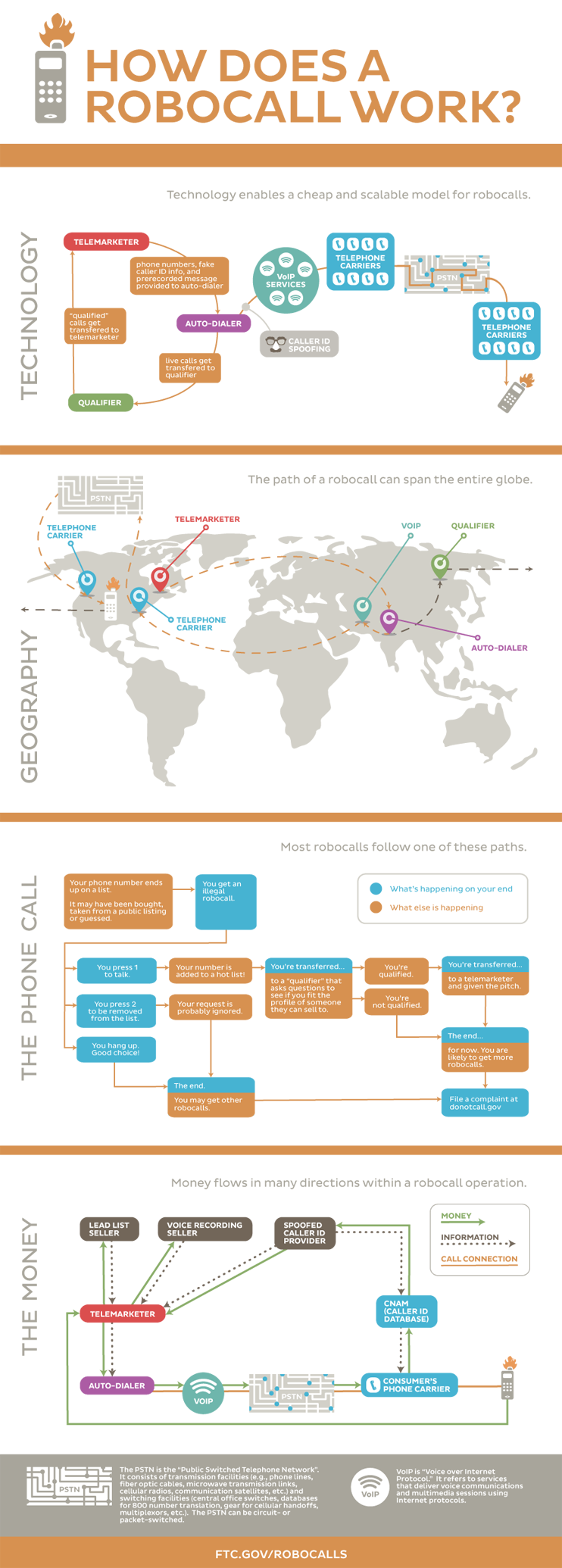
Stop Robocalls


Photo

The Federal Communications Commission said consumers received an estimated 2.4 billion robocalls per month last year. CreditGetty Images

An unfamiliar number appears on your cellphone. It’s from your area code, so you answer it, thinking it might be important.
There is an unnatural pause after you say hello, and what follows is a recording telling you how you can reduce your credit card interest rates or electric bill or prescription drug costs or any of a number of other sales pitches.
Another day, another irritating robocall. If it feels as if your cellphone has increasingly been flooded with them, you’re right.
Ryan Kalember, senior vice president of cybersecurity strategy at Proofpoint, a cybersecurity company in Sunnyvale, Calif., said the volume of robocalls has seen a “particularly big uptick” since the fall.
Continue reading the main story
In a Robocall Strike Force Report in October, the Federal Communications Commission said telemarketing calls were the No. 1 consumer complaint.
Citing statistics from YouMail, a developer of robocall-blocking software, the commission said consumers received an estimated 2.4 billion robocalls per month last year, driven in part by internet-powered phone systems that have made it cheap and easy to make them from anywhere in the world.
Alex Quilici, chief executive of YouMail, said his company estimated that 2.3 billion calls were made in December 2016, up from 1.5 billion in December 2015. The company said it extrapolates data from the calls made each month to its users.
More than annoying, the calls can cross over into the outright fraudulent. In one scheme, callers pretending to represent the Internal Revenue Service claim the person answering the phone owes back taxes and threatens them with legal action. The scheme has reaped more than $54 million, the F.C.C. said.
“If the robocalls were not valuable to the scammers, they wouldn’t be doing them,” Mr. Kalember said.
Here’s how you can fight them:

Rule No. 1

The most simple and effective remedy is to not answer numbers you don’t know, Mr. Quilici said.
“Just interacting with these calls is just generally a mistake,” he said.
If you do answer, don’t respond to the invitation to press a number to opt out. That will merely verify that yours is a working number and make you a target for more calls, experts said.

Turn to the government

List your phones on the National Do Not Call Registry. If your number is on the registry and you do get unwanted calls, report them.
Mr. Quilici said the registry is helpful but should not be seen as a panacea.
“If I’m sitting in India dialing a million numbers, what are the odds I’m even going to be fined for violating the Do Not Call Registry?” he asked. “It’s probably near zero.”

Turn to technology

Download apps such as TruecallerRoboKillerMr. NumberNomorobo and Hiya, which will block the calls. YouMail will stop your phone from ringing with calls from suspected robocallers and deliver a message that your number is out of service.
Mr. Quilici said phone companies, such as T-MobileVerizon and AT&T, also have tools to combat robocalls. They work by blocking calls from numbers known to be problematic.

Turn the tables

And then there is the Jolly Roger Telephone Company, which turns the tables on telemarketers. This program allows a customer to put the phone on mute and patch telemarketing calls to a robot, which understands speech patterns and inflections and works to keep the caller engaged.
Subscribers can choose robot personalities, such as Whiskey Jack, who is frequently distracted by a game he is watching on television, or Salty Sally, a frazzled mother.
The robots string the callers along with vocal fillers like “Uh-huh” and “O.K., O.K.” After several minutes, some will ask the callers to repeat their sales pitch from the beginning, prompting the telemarketers to have angry meltdowns, according to sample recordings posted on the company’s website.

Watch what you say

One recent scheme involves getting consumers to say “yes” and later using a recording of the response to allow unauthorized charges on the person’s credit card account, the F.C.C. warned in March.
When the caller asks, “Can you hear me?” and the consumer answers “yes,” the caller can gain a voice signature that can later be used to authorize fraudulent charges by telephone.
Best to answer with “I can hear you,” Mr. Kalember said.

What’s ahead

The callers are evolving, Mr. Kalember said. Some have numbers that appear to be from your area code (they result in higher response rates); others employ “imitation of life” software in which the robocall sounds like a live person, complete with coughing, laughing and background noise. This artificial intelligence can be programmed to interact in real time with a consumer.
A recording on the Consumers Union website features an exchange in which a man tries to confirm he is talking to a live person. As the call progresses, the consumer presses for confirmation.
“Will you tell me you’re not a robot? Just say, ‘I’m not a robot’ please,” he says, which is met with various programmed replies of “I am a real person” and “There is a live person here.”

Why do robocalls proliferate?

Mr. Quilici compared robocalling to spam emails: It is all about volume. Companies can use software to make millions of calls at very little expense. They need only a few victims to fall prey to their schemes to more than cover their costs.
“When you hear these guys do these scam pitches, they’re pretty amazing,” he said.
The next development will be integrated efforts combining email, phone calls and social media to scheme money from consumers, Mr. Kalember said, adding that the level of innovation “is really quite astounding.”
“Technology is enabling at a scale we haven’t seen before,” he said.

New Cases of the Plague

Two new cases of the human plague confirmed in New Mexico 


UNDATEDHANDOUT IMAGE PROVIDED BY ROCKY MOUNTAIN LABORATORIES / NO SALES, NO ARCHIVES
Health officials say there have been three cases in 2017 in New Mexico, so far. (AP)

BY ELIZABETH ELIZALDE
NEW YORK DAILY NEWS

New Mexico health officials have confirmed two new cases of the human plague in the state this year.

A 52-year-old woman and a 62-year-old woman in Santa Fe County have been treated for the disease, the New Mexico Department of Health said Monday.

There have been three human plague cases reported in Santa Fe County this year, so far, and all patients were hospitalized. There have been no deaths.

Health officials are investigating the patients’ home to make sure there are no ongoing threats to other residents.

Humans usually contract the plague through bites from fleas carrying the bacteria. It can also be transmitted through direct contact with infected rodents and wild animals, according to health officials.

Seven cases of the plague have been reported each year in recent decades, the Centers for Disease Control and Prevention says.

Symptoms include sudden fevers, chills, headaches and fatigue.

In 2016, there were four reported human plague cases in three New Mexico counties. Four people also contracted the disease in 2015, which resulted in one death.